































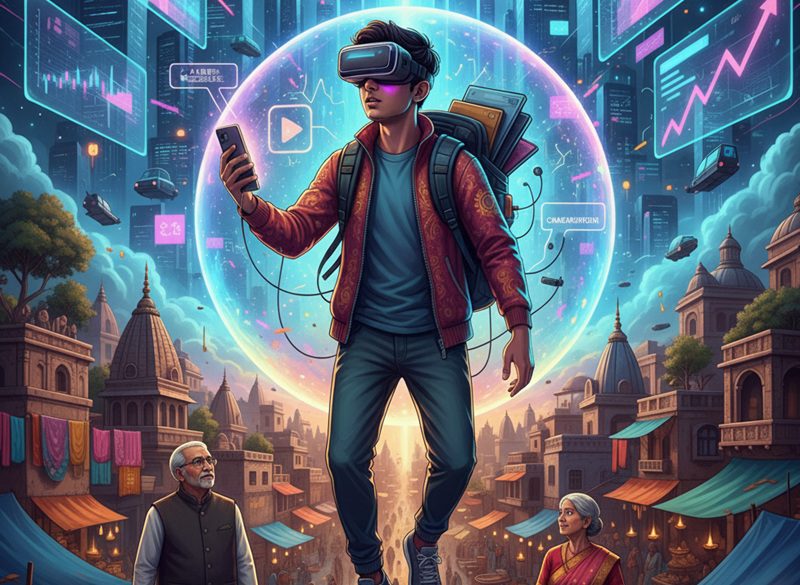
Trishanku’s Heaven: The Ancient Myth Mirroring Modern Gen Z Burnout
Indian Mythology is a treasure of moral and life lessons for people across age groups. We covered few in past. Now, for Gen Z!
The weight of expectation. The relentless scroll. The feeling of being perpetually “in-between.” If you’re Gen Z in India today, you’ve likely felt it. That unique pressure of standing at the crossroads of a rich cultural heritage and a hyper-connected, globalized future. You’re building careers, crafting identities, and navigating a world that often feels like it’s pulling you in a thousand different directions.
It might surprise you to know that an ancient Indian myth perfectly encapsulates this very modern dilemma: the legend of King Trishanku.
A King’s Audacious Wish & A Sage’s Power Play
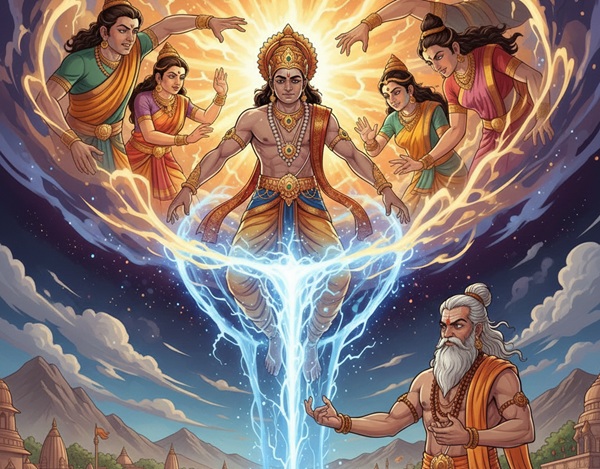
Trishanku was an ambitious king who desired something unprecedented: to ascend to heaven in his physical body. The traditional celestial gatekeepers found this idea outrageous and denied him entry. Undeterred, Trishanku turned to the powerful sage Vishwamitra, who, in an act of defiance, used his immense yogic power to launch the king towards the heavens.
But the gods pushed him back. And Vishwamitra, determined not to let him fall, sustained him in mid-air. Trishanku ended up suspended between heaven and earth, neither here nor there. This became known as “Trishanku’s Heaven” – a liminal, often uncomfortable, space.
Why Trishanku’s Heaven is Your Monday Morning Mood
Doesn’t that sound eerily familiar? Let’s unpack why Trishanku’s ancient plight is the ultimate Gen Z metaphor:
The Pursuit of the “Impossible”:
Then: Trishanku sought physical ascension to heaven, a forbidden feat.
Now: We’re chasing viral fame, astronomical salaries before 30, perfect aesthetics, or startup success that feels like winning the lottery. These are often “heavens” defined by others, and the pursuit can be exhausting. Are we chasing someone else’s definition of success?
Caught Between Worlds (Traditional vs. Modern): Gen Z Dilemma
Then: Trishanku was rejected by both the earthly realm (for seeking the impossible) and the celestial realm (for being an outsider).
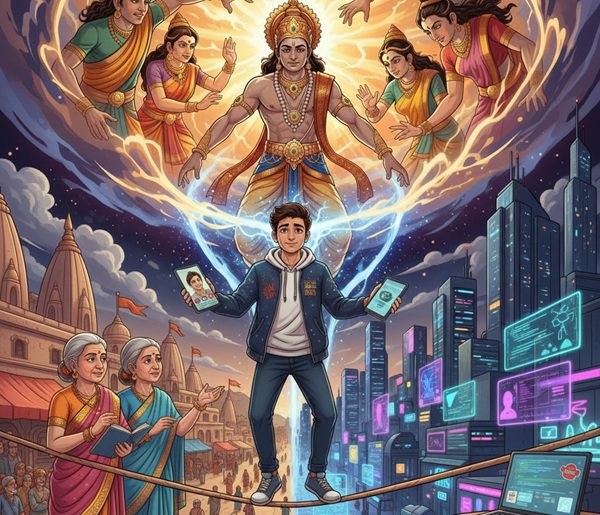
Now: Many Indian Gen Z individuals are caught between family expectations (traditional career paths, marriage, stability) and global aspirations (digital nomadism, unconventional careers, independent living). It’s a constant tightrope walk, and sometimes it feels like you belong fully to neither world. This creates a unique identity crisis for many.
Gen Z: The Hustle Culture Burnout
Then: Trishanku’s continuous effort to ascend, and then his suspension, represents an ultimate state of being “stuck” with no resolution.
Now: The relentless hustle culture demands constant productivity and visibility. You’re working hard, but are you truly moving forward, or just expending energy being suspended between tasks, social media pressures, and overwhelming deadlines? This leads directly to youth burnout and declining mental health.
Finding Your Own Orbit: Lessons from the In-Between
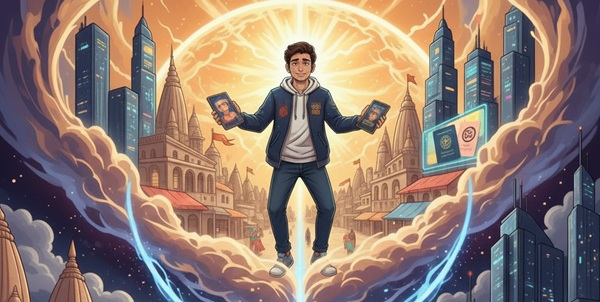
The legend of Trishanku doesn’t end in perpetual suspension. Eventually, Vishwamitra, seeing Trishanku’s plight, created an entirely new celestial sphere for him. A custom heaven, just for Trishanku.
This is where the real lesson for Gen Z lies:
Redefine Your “Heaven”: Stop chasing external definitions of success or perfection. What does your heaven look like? What truly brings you peace, purpose, and joy?
Build Your Own Universe: If traditional paths or societal norms don’t fit, it’s okay to forge your own. The digital age empowers you to create your own “third spaces,” communities, and career paths. Don’t wait for permission; build it.
Embrace the Liminal Space: Sometimes, being “in-between” is a period of immense growth and introspection. It’s not a failure; it’s a phase of transition. Use it to understand yourself better. Practice self-care and acknowledge the toll that career pressure can take.

Conclusion: The story of Trishanku reminds us that the pursuit of external validation can leave us suspended and unfulfilled. Instead, empower yourself to define your own skies, build your own stars, and find peace in your unique journey. Your worth isn’t determined by whether you reach someone else’s heaven, but by the courage to create your own.
FAQs: Trishanku’s Heaven In The Context Of Gen Z
What does “Trishanku’s Heaven” literally mean in Indian mythology?
It refers to a state of being suspended between two worlds or states, belonging fully to neither. It’s often used metaphorically to describe a dilemma or an unresolvable situation where one is caught in the middle.
How is Trishanku’s story relevant to Indian Gen Z’s career choices?
Many Indian Gen Z individuals face a unique career pressure balancing parental expectations for stable, traditional jobs (like engineering or medicine) with their own aspirations for creative, unconventional, or startup-based roles. This often leads to feeling “suspended” between these two very different career ideals.
Can this myth help address Gen Z’s mental health challenges in India?
Absolutely. The feeling of being suspended, of constantly striving but not quite belonging, directly contributes to stress, anxiety, and youth burnout. Understanding Trishanku’s story can validate these feelings and encourage seeking one’s own path, prioritizing self-care over relentless external validation.

What is the “liminal space” in the context of Trishanku and Gen Z?
The “liminal space” refers to a transitional or in-between state. For Trishanku, it was literally between heaven and earth. For Indian Gen Z liminality, it’s the period of being between childhood and full adulthood, between traditional values and globalized culture, or between expected paths and desired dreams, often creating an identity crisis.
How can Gen Z avoid the “Trishanku trap” of perpetual suspension?
By actively defining personal values, setting realistic goals, embracing unconventional paths, prioritizing well-being, and building supportive communities (online and offline). It means not waiting for an external “Vishwamitra” to create your heaven, but consciously building it yourself, whether through upskilling, personal projects, or finding a supportive tribe.
Are there positive interpretations of being “suspended between worlds” for Gen Z?
Yes! This “limishankunality” can foster immense creativity, resilience, and adaptability. Being exposed to both traditional and modern perspectives can lead to innovative ideas, cross-cultural understanding, and the ability to thrive in ambiguity, essentially becoming a digital nomad of culture and careers.
Does the story of Trishanku offer any lessons on navigating the traditional vs. modern dilemma for young Indians?
It teaches us that attempting to force a fit into a system not designed for you can lead to frustration and suspension. The ultimate lesson is the courage to build a third space or a new system that does accommodate your unique ambitions and identity, rather than perpetually trying to please two conflicting worlds.
As Gen Z, What are your thoughts on Trishanku’s Heaven?
Have you ever felt suspended between expectations and your own aspirations? How do you navigate the pressures of hustle culture while trying to stay true to yourself? Share your experiences and insights in the comments below!
#GenZIndia #TrishankusHeaven #HustleCulture #MentalHealthMatters #IndianMythology #IdentityCrisis #YouthEmpowerment #DigitalIndia #TraditionVsModernity #Wellbeing









Buraya tıklayarak inceleyin: Takipçi Satın Al
For informed buying decision visit – https://bestbuyingideas.com/
İncelemek için tıkla: Online Oyunlar
İncelemek için tıkla: SEO Paketleri
For informed buying decisions, visit – https://topbuyingidea.com/
İncelemek için tıkla: Film İzleme Siteleri
For informed buying decisions, visit – https://topbuyingidea.com/
İncelemek için tıkla: Silinen Mesajları Görme
For informed buying decisions, visit – https://topbuyingidea.com/
İncelemek için tıkla: Ücretsiz Takipçi
For informed buying decisions, visit – https://topbuyingidea.com/
İncelemek için tıkla: Ücretsiz Takipçi
For informed buying decisions, visit – https://topbuyingidea.com/
Satın almak için tıklayın: Takipçi Satın Al
Başlatmak için tıklayın: Ücretsiz Takipçi
Başlatmak için tıklayın: Ücretsiz Beğeni
Başlatmak için tıklayın: İzlenme Hilesi
Başlatmak için tıklayın: Takipçi Hilesi
Başlatmak için tıklayın: Youtube Abone Hilesi
**mitolyn**
Mitolyn is a carefully developed, plant-based formula created to help support metabolic efficiency and encourage healthy, lasting weight management.